Writing an eBook sounds exciting… until you actually start.
The blank page stares back at you. The ideas that felt brilliant in your head suddenly feel overwhelming and disjointed on screen. Then comes the editing stress, the formatting headache, and the nagging feeling that you’ll never actually cross the finish line.
The truth? Most aspiring authors don’t struggle with ideas—they struggle with structure, clarity, and consistency.
The good news is this: With the right AI tools, writing an eBook is no longer overwhelming. It becomes strategic, fast, and even enjoyable. You can move from a “concept” to a “completed manuscript” in a fraction of the time it took authors just five years ago.
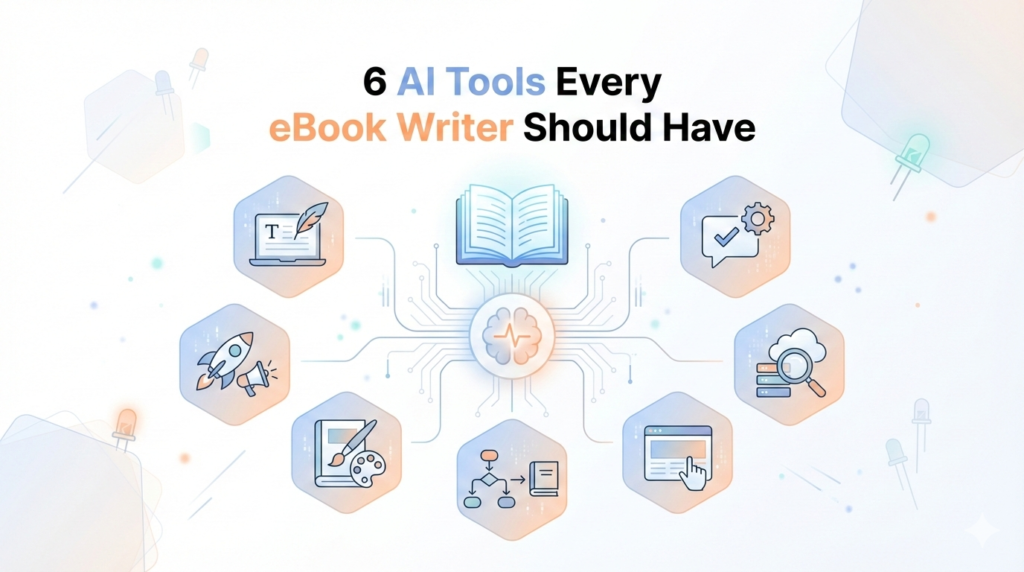
Here are 6 powerful AI tools every eBook writer should have in their digital arsenal:
1. ChatGPT – Your AI Writing Partner
If you’re staring at a blank page, this is your primary solution. Think of ChatGPT not as a replacement for your creativity, but as a high-level research assistant and architect.
You can use ChatGPT to:
- Generate book outlines in minutes: Feed it your core concept and ask for a 10-chapter breakdown.
- Brainstorm chapter ideas: If a section feels thin, ask for five sub-topics to explore.
- Expand bullet points into full sections: Turn your rough notes into cohesive paragraphs.
- Rewrite messy drafts: Paste a “brain dump” and ask it to organize the thoughts logically.
- Create summaries and hooks: Draft compelling back-cover copy or introduction teasers.
Pro Tip: Ask it to create a detailed chapter breakdown before you start writing. Define the “Key Takeaway” for each chapter. Structure eliminates overwhelm because it tells you exactly what to work on next.
2. Grammarly – Your Personal Editor
Great ideas lose impact when grammar is poor. Even the most profound insights can be dismissed if the reader is constantly tripping over typos or misplaced commas.
Grammarly helps you:
- Fix grammar and punctuation: Catch the errors your tired eyes miss after hours of writing.
- Improve clarity: It identifies “muddy” sentences and suggests crisper alternatives.
- Adjust tone: Whether you want to sound professional, conversational, or persuasive, Grammarly ensures your “voice” remains consistent.
- Eliminate wordiness: It cuts the fluff that slows down your reader’s progress.
Using an AI editor instantly makes your eBook look more credible and professional, giving you the confidence to hit “publish.”
3. Otter.ai – Talk Instead of Type
Some writers think much faster than they can type. If you find yourself paralyzed by the keyboard, it might be because your fingers can’t keep up with your brain’s “flow state.”
Otter.ai allows you to:
Speak your ideas: Use the mobile app to record your thoughts while walking, driving, or washing dishes.
Automatically convert speech to text: It provides a highly accurate transcription in real-time.
Capture spontaneous inspiration: Never lose a “lightbulb moment” again just because you weren’t near your desk.
This tool is perfect for when you’re tired of typing but your ideas are still flowing. You can “write” an entire chapter during your morning commute.
4. Google Docs – With Built-in Voice Typing
If you want a free, powerful alternative for talk-to-text that lives directly within your manuscript file, Google Docs is the industry standard.
Google Docs offers:
- Voice typing: Simply go to Tools > Voice Typing and start talking.
- Real-time cloud saving: Never worry about losing a draft; every keystroke (or spoken word) is saved instantly.
- Easy collaboration: Share your draft with beta readers or editors and see their comments in the margins.
- Simple formatting: Standardized headings make it easy to export your text to design software later.
You can literally draft entire chapters by speaking, making the physical act of “writing” much less taxing on your body and mind.
5. Hemingway Editor – Simplify Your Writing
Many eBooks fail because they’re too complex. In the world of digital products, readability is king. If your sentences are too long or your vocabulary is too academic, readers will drop off.
Hemingway helps you:
- Shorten long sentences: It highlights “hard to read” sentences in yellow and “very hard to read” sentences in red.
- Reduce passive voice: It encourages active, punchy verbs that drive the narrative forward.
- Improve readability: It gives you a “Grade Level” score. Aim for Grade 6-8 for maximum reach.
- Make your content clearer: It identifies unnecessary adverbs that weaken your prose.
Remember: Clear writing sells better. Hemingway ensures your message is accessible to everyone.
6. Canva – Design & Format Like a Pro
A well-written eBook can still fail if it looks unprofessional. In a crowded digital marketplace, people do judge a book by its cover—and its interior layout.
Canva helps you:
- Design clean layouts: Use pre-made eBook templates to ensure your margins and typography are aesthetic.
- Create stunning covers: Access thousands of high-quality graphics and fonts to create a “best-seller” look.
- Add visuals and branding: Easily integrate charts, checklists, and your brand colors.
- Export ready-to-sell PDFs: Get a high-resolution file ready for platforms like Amazon KDP, Gumroad, or your own website.
First impressions matter—especially in digital products. Canva bridges the gap between a “word document” and a professional product.
Why These Tools Matter
In the modern creator economy, writing an eBook is no longer about talent alone. While your unique perspective is the heart of the book, these tools provide the “skeleton” and “skin” that make it a viable product.
Writing an eBook is now about:
- Structure: Using AI to organize thoughts so you don’t get lost.
- Speed: Getting your ideas to market before they become irrelevant.
- Strategy: Writing for clarity and engagement rather than just “filling pages.”
- Presentation: Ensuring the final look matches the quality of the information.
When you combine AI writing, editing, voice drafting, and professional design, you don’t just write an eBook… You create a product that sells.
Want to Turn Your eBook Into a Lead-Generating Machine?
Writing the book is one thing. Marketing it and making sure it actually grows your business is another. An eBook shouldn’t just sit on a digital shelf; it should be a tool that brings you clients, authority, and revenue.
If you want help with:
- Positioning your eBook to stand out in a crowded niche.
- Building a sales funnel that captures emails and drives conversions.
- Running ads to promote your book to the right audience.
- Creating a launch strategy that generates momentum from Day 1.
- Turning readers into paying clients for your high-ticket services.
Book a free strategy session and let’s map out a growth plan tailored to your brand. Let’s take your eBook from a finished file to a powerful business asset.